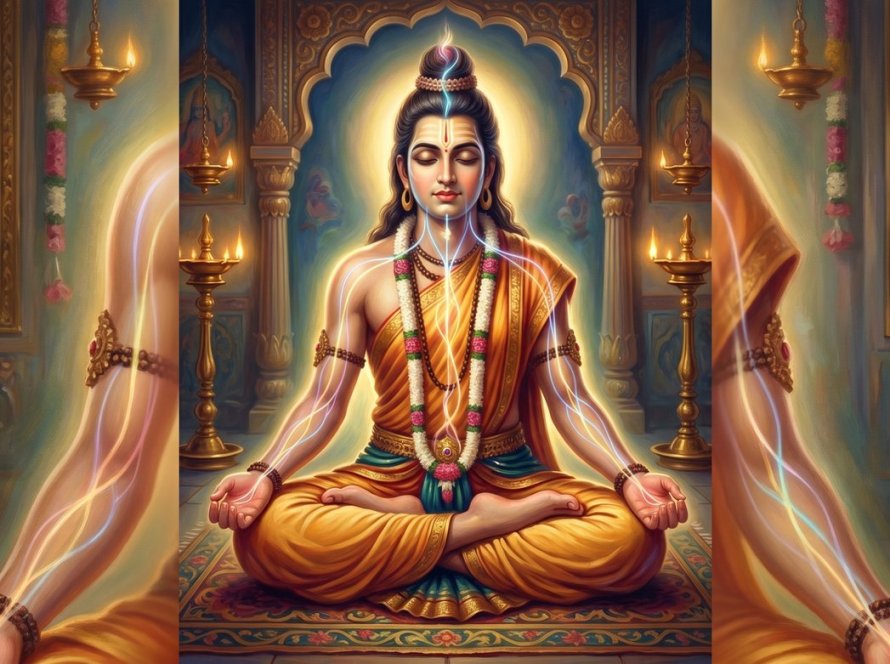
Asana: The Meditative Seat (Limb 3 of Ashtanga Yoga)
The third limb of Ashtanga Yoga. To the modern ear “asana” means physical postures — but in Patanjali’s yoga it means something more specific and more inward: the steady seat of meditation.
Steady and comfortable
Patanjali devotes just three short sutras to asana, and the first is famous for its economy (Yoga Sutras 2.46): “Sthira-sukham asanam” — the posture should be steady and comfortable. Two qualities, held together: sthira, firm and unwavering, and sukha, easeful and relaxed. A seat that is rigid but tense will not do; nor will one that is relaxed but collapsing. The art is the meeting of stillness and ease.
Why posture matters
The reason is simple: the body and the mind mirror one another. A restless, uncomfortable body keeps tugging the attention back to itself — an itch, an ache, a shift of weight. But a body that is truly steady and at ease can be, in effect, forgotten, freeing the whole of the attention to turn inward. The spine is kept naturally erect, so that the life-force can flow freely upward along it — the prerequisite for the pranayama that follows and for the rising of energy through the channels of the spine.
Asana and modern yoga
It is worth being clear about a common confusion. The flowing sequences of postures practised in modern studios grew, over centuries, out of the later Hatha Yoga tradition. They have real value — a supple, healthy body certainly helps one sit still. But in Patanjali’s original eightfold scheme, asana is essentially the meditative seat: a single, stable position (such as a cross-legged pose, or simply sitting upright) that can be held, motionless and at ease, for the length of a meditation.
The mastery of the seat
Patanjali adds that asana is perfected when all effort relaxes and the mind settles into the infinite (2.47) — and that then the pairs of opposites, heat and cold, comfort and discomfort, cease to disturb the meditator (2.48). The steady seat thus becomes far more than a physical arrangement; it becomes a doorway, the body grown so quiet that consciousness can begin its journey within.
Related reading: Mudras for Meditation.
Frequently Asked Questions
What does asana mean in Patanjali’s yoga?
A steady, comfortable seated posture for meditation — sthira sukham asanam — rather than a system of physical exercises.
Is asana the same as modern yoga postures?
Modern posture yoga grew out of this limb, but Patanjali’s asana refers specifically to a firm seat that lets the body be forgotten in meditation.
Why is posture the third limb?
Once conduct is steadied through yama and niyama, a firm seat prepares the body for breath-control and inner concentration.