Mudras for Meditation
Sacred hand gestures that focus the mind, seal the life-force, and deepen the meditative state.
A mudra is a symbolic gesture — most often made with the hands — used to focus the mind and guide the flow of life-force in meditation. The word means “seal” or “gesture” in Sanskrit. Though simple, mudras are a beautiful and ancient aid to practice. This guide explains what mudras are, how they help, and the key hand gestures used in meditation.
How Mudras Help Meditation
In meditation, mudras act as gentle focal points. They quiet restlessness, steady the attention, and are traditionally said to seal and circulate prana (life-force) within the body. Held with calm intention, a mudra becomes a quiet reminder to the body and mind: be still, turn within.
They are a natural companion to pranayama and the meditative seat described in the eight limbs of yoga. The great masters of India have used mudras for thousands of years — not as external displays, but as subtle internal alignments that create the conditions for higher states of consciousness.
Key Mudras for Meditation
Anjali Mudra — Namaste
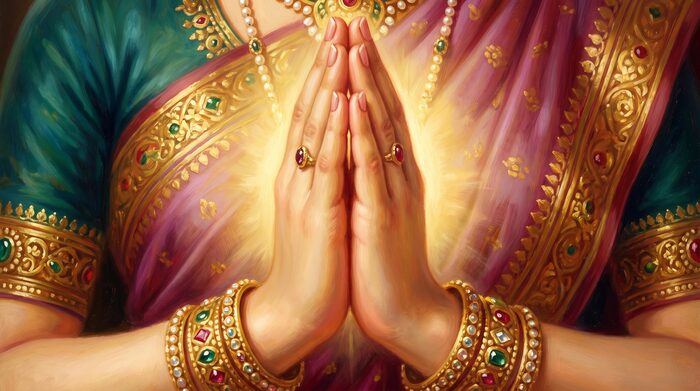
The palms are pressed gently together at the heart. Anjali mudra expresses reverence, gratitude and the union of opposites within. It is a beautiful way to begin and end a period of meditation, gathering the mind into devotion. When we bring the hands together at the heart, we are symbolically joining the right and left hemispheres of the brain — the solar and lunar, the active and receptive — into one unified awareness.

Gyan (Chin) Mudra
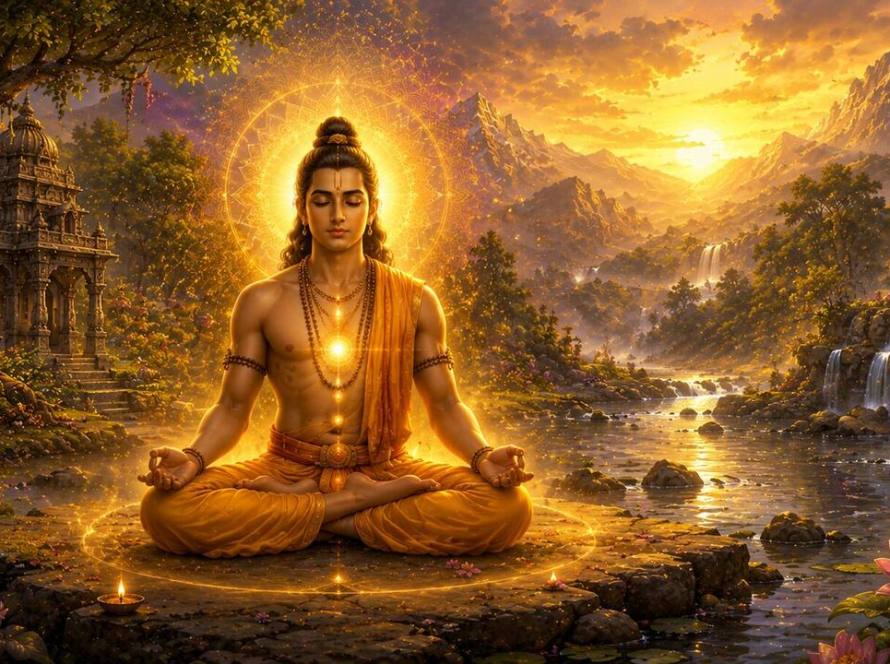
Resting the hands on the knees, the tip of the thumb lightly touches the tip of the index finger while the other fingers extend softly. Gyan mudra is the classic meditation gesture — it symbolises the union of the individual self (index finger) with the universal Self (thumb), and quietly steadies the mind. It is the mudra most often depicted in images of the Buddha and other great sages.
Dhyana Mudra
Both hands rest in the lap, palms upward, the right resting upon the left with the thumb-tips lightly touching. Dhyana mudra is the gesture of deep meditation, drawing the awareness inward toward stillness. It forms a triangle that represents the three jewels of Buddhism — the Buddha, the Dharma, and the Sangha — or in the yogic tradition, the union of method and wisdom.
Prithvi Mudra
The tip of the thumb touches the tip of the ring finger, with the other fingers extended. Prithvi mudra is a gentle, grounding gesture that activates the earth element within the body. It promotes stability, confidence, and a sense of being rooted in the present moment — an excellent choice for those who feel scattered or anxious during meditation.
How to Use Mudras in Your Practice
Choose one mudra, settle into a comfortable seat, and let the hands rest without strain. Keep the attention on the breath and the spiritual eye; let the mudra be a quiet support, not a distraction. The gesture should feel natural and effortless — if the fingers begin to ache, relax them and try again later.
Mudras deepen meditation — they do not replace it. They are like the posture of a musician: essential for the performance, but not the music itself. The real practice is the inward turning of attention, the gathering of the scattered mind to the point of inner light.
The Body Speaks Silence
In the yogic view, the body is not an obstacle to spiritual growth but a vehicle for it. Every part of the body — including the hands — can be trained to support the inward journey. Mudras are the language of this training: silent gestures that speak directly to the nervous system, guiding it toward stillness, clarity, and peace.
Mantras & Japa →