Karma Yoga: The Path of Action
Karma Yoga — the path of action — is one of the four great paths to God taught in the Bhagavad Gita. It is the yoga of those who would find the Divine not by withdrawing from the world, but in the very midst of work and duty.
The central principle
Krishna gives the heart of Karma Yoga in a single verse: “You have a right to your actions alone, never to their fruits. Let not the fruit of action be your motive, nor be attached to inaction” (Gita 2:47). We are to act wholeheartedly and well, but to surrender all attachment to the results — success or failure, praise or blame. The work is ours to do; the outcome belongs to God.
Why it frees the soul
Ordinary action binds us because it is driven by selfish desire and leaves a trail of cravings and disappointments. When action is offered selflessly — as yajna, a sacrifice to the Divine — it no longer binds. “Work done as worship,” the Gita teaches, purifies the heart and gradually burns away the ego. The Karma Yogi remains “even-minded in success and failure,” and that evenness is yoga (2:48).
Action in the world
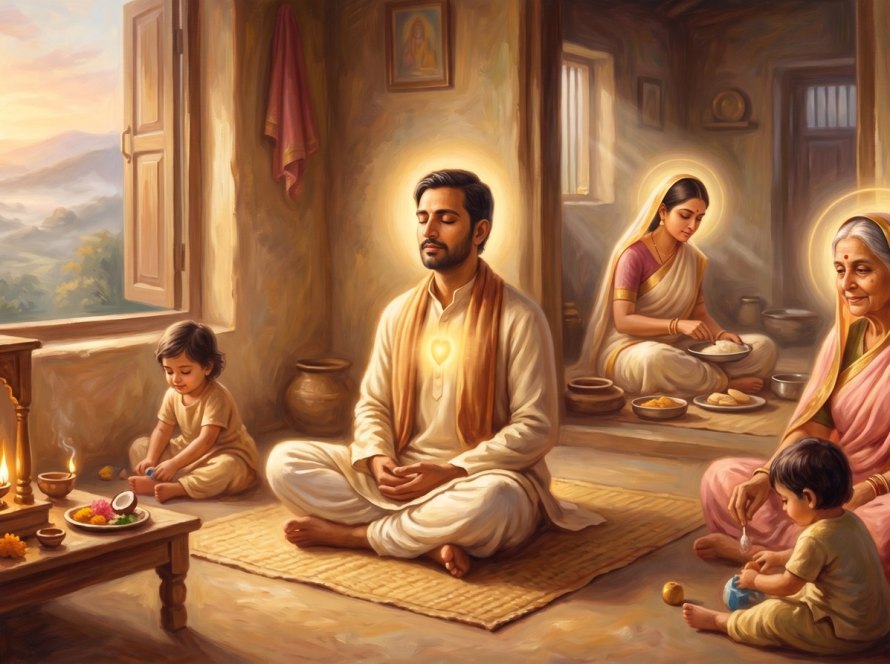
Karma Yoga is the most accessible path, because everyone must act. The cook, the parent, the labourer, the leader — all can transform their daily duties into spiritual practice simply by changing the spirit in which they work: doing their best, dedicating the result to God, and releasing the need to control outcomes. Great souls, Krishna says, also act for the welfare of the world (lokasangraha), setting a selfless example for others.
The link to Kriya Yoga
Karma Yoga purifies the heart and quiets the restless craving that disturbs meditation. It pairs naturally with the inner work of Kriya Yoga: selfless action by day, deep meditation in stillness — the outer and inner faces of one surrendered life. As the householder saint Lahiri Mahasaya showed, one can live fully in the world and yet be wholly devoted to God.
Explore the other paths: Bhakti Yoga, Jnana Yoga, and Dhyana Yoga; or return to the Bhagavad Gita.