The Bhagavad Gita— Chapter 18: Moksha-Sannyasa Yoga (Liberation through Renunciation)
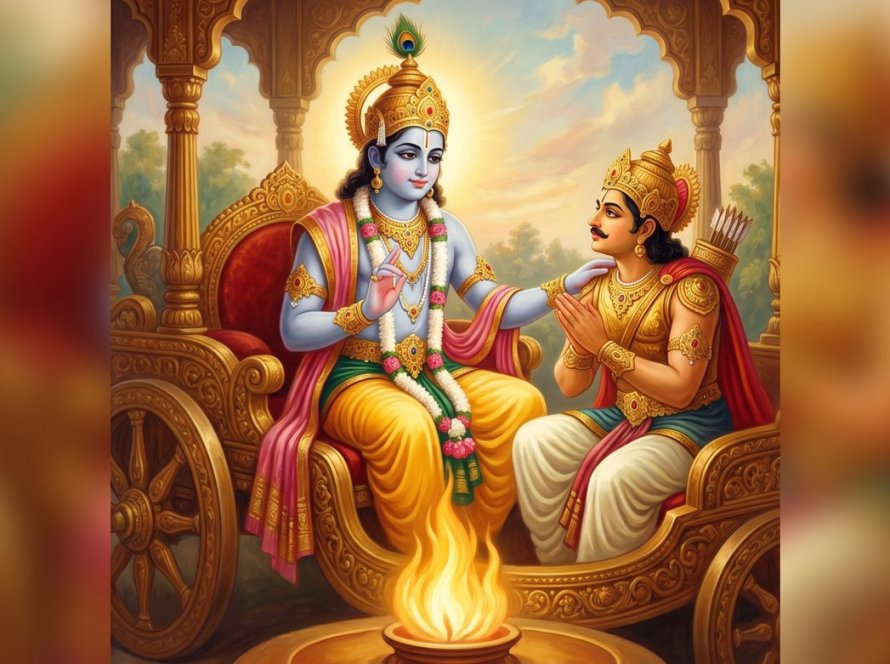
Chapter 18 of the Bhagavad Gita, Moksha-Sannyasa Yoga (“The Yoga of Liberation through Renunciation”), is the longest chapter — 78 verses — and the grand summation of the entire teaching. Here Krishna gathers every thread of the dialogue and leads Arjuna to his final, freeing decision.
Renunciation rightly understood
Arjuna asks the difference between sannyasa (renunciation of action) and tyaga (relinquishment). Krishna clarifies: true renunciation is not abandoning action, but abandoning attachment to its fruits. Acts of sacrifice, charity and austerity should never be given up — they purify the wise — but they must be performed without clinging to results. This is the highest tyaga.
Everything in threes
Krishna completes his analysis of the three gunas by showing how knowledge, action, the doer, the intellect, willpower and even happiness each appear in sattvic, rajasic and tamasic forms. The seeker learns to recognise and choose the sattvic in all things — the clear, the selfless, the steady — as a ladder toward freedom.
Your own duty
He returns to swadharma: it is better to do one’s own duty imperfectly than another’s perfectly (18:47). Work suited to one’s nature, offered to God, becomes a path to perfection: “By worshipping Him through one’s own work, a person attains perfection” (18:46).
The supreme instruction
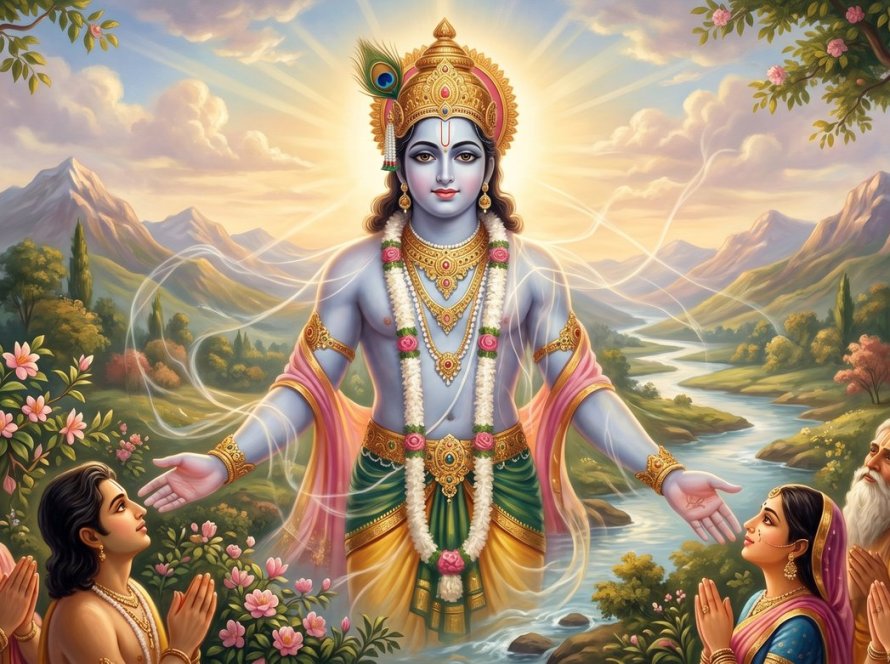
Then comes the climax of the whole Gita, its final and most secret counsel: “Abandon all dharmas and take refuge in Me alone. I shall free you from all sins; do not grieve” (18:66). Beyond every rule and discipline lies total surrender to the Divine — and in that surrender, complete liberation.
Arjuna’s doubt dispelled
Krishna asks whether Arjuna has listened with one-pointed attention and whether his delusion is destroyed. Arjuna replies: “My delusion is gone. By Your grace I have regained memory. I stand firm, my doubts dispelled. I will act according to Your word” (18:73). The teaching has done its work. Sanjaya closes the Gita declaring that wherever Krishna the Lord of Yoga and Arjuna the archer are together, there will be “prosperity, victory, happiness and firm righteousness” (18:78).
For the Kriya yogi
The Gita ends where Kriya Yoga aims: loving surrender of the whole self to the Divine within. Method and devotion meet in that final “take refuge in Me alone.” Return to the Bhagavad Gita overview.
This is part of our complete Bhagavad Gita summary of all 18 chapters.