


The Bhagavad Gita— Chapter 14: Gunatraya-Vibhaga Yoga (The Three Gunas)
Chapter 14 of the Bhagavad Gita, Gunatraya-Vibhaga Yoga (“The Yoga of the Division of the Three Gunas”), explains the three fundamental qualities of Nature that shape all experience — and how the soul can rise beyond them. Its 27 verses are a practical map of the inner life.
The three gunas
All of Nature (prakriti) is woven of three gunas, or qualities, which bind the soul to the body:
- Sattva — purity, light, harmony and knowledge. It binds through attachment to happiness and wisdom.
- Rajas — passion, restlessness and craving. It binds through attachment to action and its results.
- Tamas — inertia, darkness and delusion. It binds through negligence, laziness and sleep.
At every moment one guna predominates, colouring our thoughts and deeds; the spiritual path is to cultivate sattva, then rise even beyond it.
Living and dying by the gunas
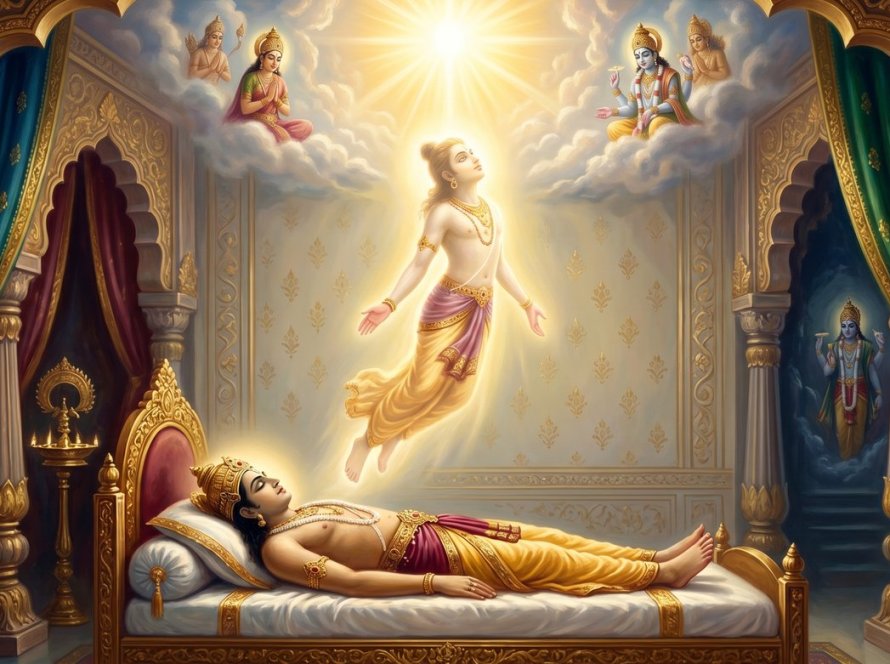
Krishna describes how each quality leaves its mark even at death: one who dies in sattva rises to the pure worlds of the wise; one who dies in rajas is reborn among the active and attached; one who dies in tamas sinks into deluded births. Our prevailing quality shapes our destiny.
Beyond the three: the Gunatita
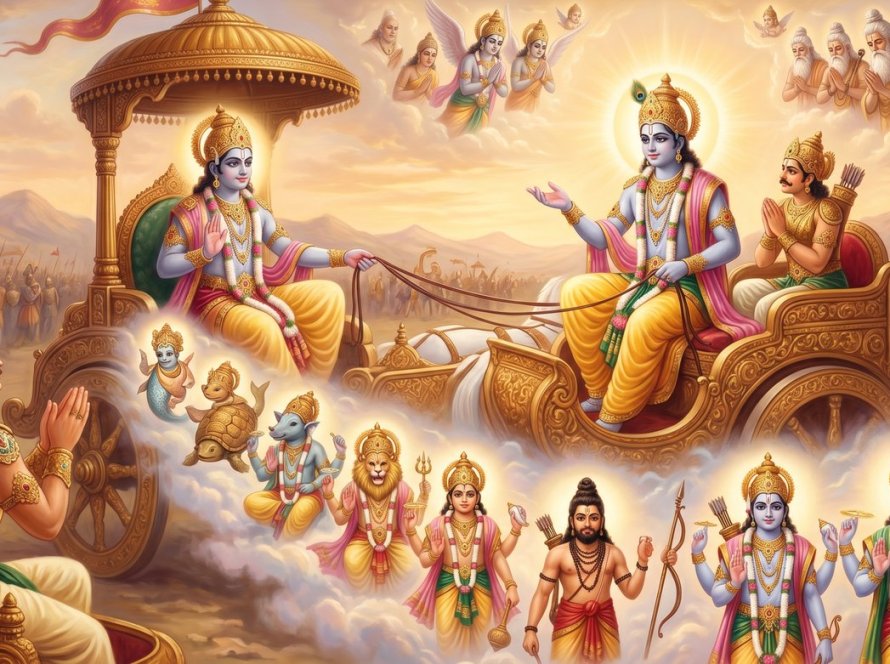
Arjuna asks how to recognise one who has transcended the gunas. Krishna describes the gunatita (14:22–25): such a one neither craves the gunas when present nor shuns them when absent; remains unshaken, knowing “it is only the gunas that act”; is even-minded in pleasure and pain, in honour and dishonour, in friend and foe — established in the Self. “He who serves Me with unswerving devotion,” Krishna concludes, “transcends the three gunas and becomes fit for union with Brahman” (14:26).
For the Kriya yogi
This chapter gives the yogi a mirror for self-knowledge: to observe which guna is moving within, to nourish sattva through calm and meditation, and finally, through devotion and Kriya practice, to rest in the Self beyond all three. Explore our dedicated page on the Three Gunas, or return to the Bhagavad Gita overview.
This is part of our complete Bhagavad Gita summary of all 18 chapters.

1 Comment