


The Bhagavad Gita— Chapter 8: Akshara-Brahma Yoga (The Imperishable Absolute)
Chapter 8 of the Bhagavad Gita, Akshara-Brahma Yoga (“The Yoga of the Imperishable Absolute”), turns to the great questions of death and what lies beyond. Its 28 verses describe the soul’s passage at the hour of death and the supreme, deathless reality.
The last thought
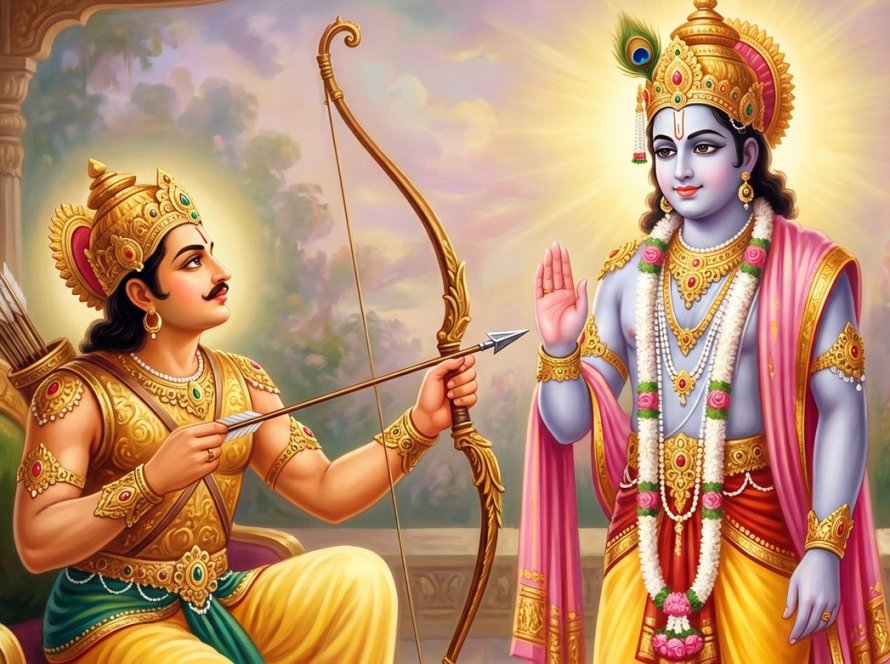
Krishna gives a teaching of immense practical weight: “Whatever state of being one remembers at the time of leaving the body, that state one attains” (8:6). Therefore, he says, “remember Me at all times and fight” — for the mind steadied in the Divine throughout life will naturally turn to the Divine at the end. Death is the final examination of a life’s meditation.
The yogi’s conscious departure
Krishna describes the realised yogi’s death: with mind unmoving, full of devotion, “he draws the life-force (prana) up between the eyebrows” and, sounding the sacred syllable Om, departs the body to attain the supreme goal (8:10–13). This conscious, controlled exit through the spiritual eye is precisely what the Kriya tradition trains the yogi to achieve.
The cycles of creation
Krishna speaks of the vast “day and night of Brahma” — the immense cycles in which worlds and beings emerge and dissolve, again and again. Beyond all these cycles is the unmanifest, imperishable Reality — “that which is called the highest goal, from which there is no return; that is My supreme abode.”
The two paths
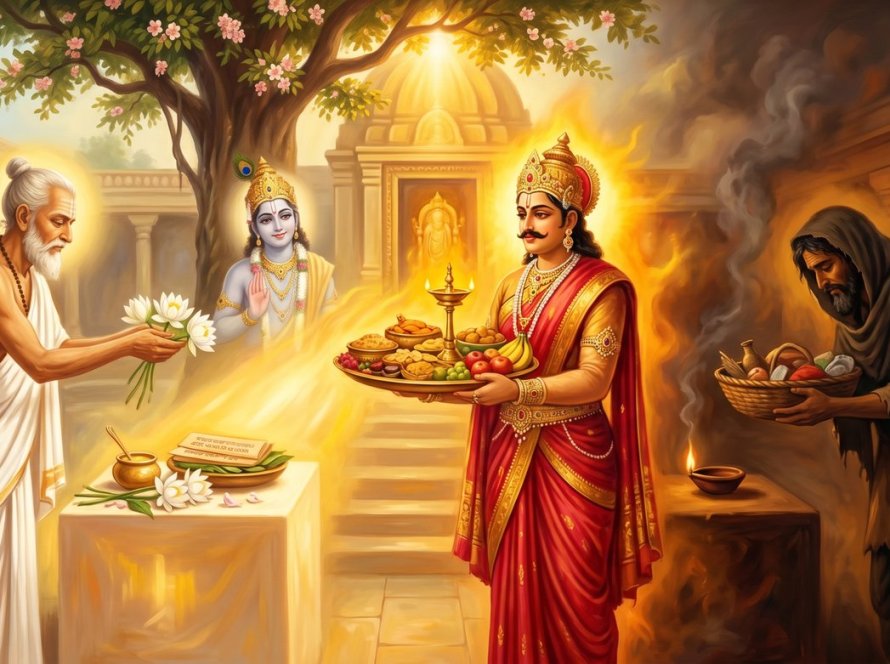
He describes the bright path (of light, leading to liberation and no return) and the dark path (of smoke, leading back to rebirth) by which souls depart. The yogi who knows these is not deluded; therefore Krishna urges, “be steadfast in yoga at all times.”
For the Kriya yogi
This chapter is unmistakably a teaching on the mastery of life-force and attention — raising prana to the spiritual eye, merging in Om — which Kriya Yoga makes a living practice rather than a deathbed hope. Return to the Bhagavad Gita overview.
This is part of our complete Bhagavad Gita summary of all 18 chapters.

1 Comment