The Spiritual Eye: Awakening the Ajna Chakra
Between the eyebrows lies a doorway spoken of in every great tradition — the single eye, the third eye, the seat of inner vision. What is it, and why do meditators turn their gaze toward it?
The eye that looks within
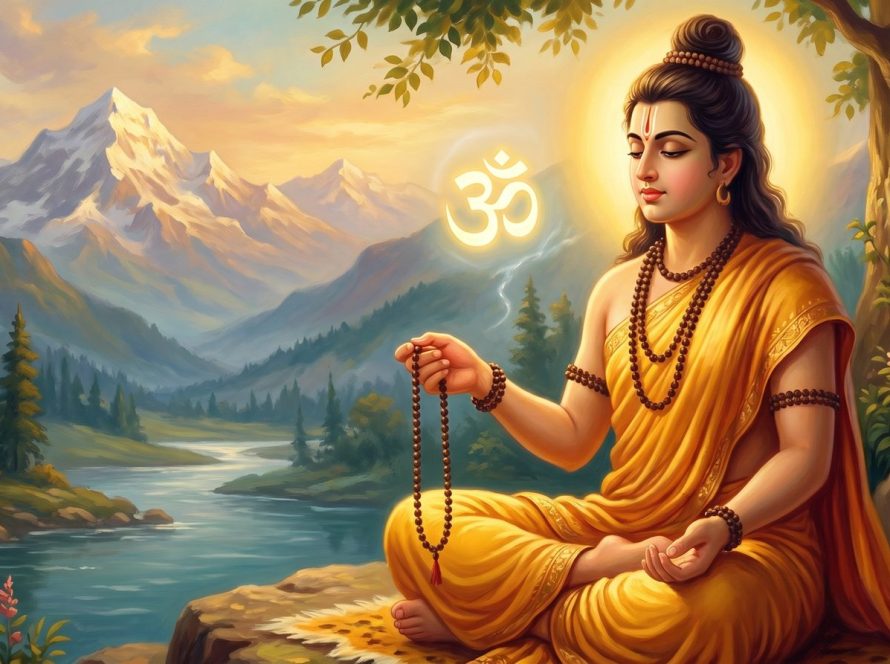
The ajna chakra — the “command centre” — is the subtle centre located at the point between the eyebrows, often called the spiritual eye or third eye. Where the two physical eyes look outward upon the world of duality, this single eye looks inward upon the one Reality. In deep meditation it is experienced not as an idea but as light: a luminous field of awareness at the forehead, the threshold across which consciousness withdraws from the body into Spirit.
The single eye of the scriptures
This centre is not the property of one religion. The yogis call its still inner point the kutastha, the unchanging seat of Christ- or Krishna-consciousness. The Gospels speak of it directly: “If therefore thine eye be single, thy whole body shall be full of light.” The mark worn on the forehead in India, the tilaka, honours the very same spot. Across cultures the message is consistent: turn the divided outward gaze into a single inward one, and the inner light dawns.
Why meditators gaze at the point between the eyebrows
In Kriya and many allied paths, the meditator gently lifts the closed eyes and rests the attention at the spiritual eye. There is a simple reason: where attention goes, life-force follows. By centring awareness at the ajna, the scattered energies of the senses are gathered and drawn upward along the spine, away from restlessness and toward stillness. This is why the same point recurs again and again in the deepening stages of practice described in From Breath to Bliss, and why awakening this centre is bound up with the rise of kundalini.
A note of patience
The spiritual eye is not opened by straining or by staring hard — effort of that kind only creates tension and headache. It unveils itself naturally as the mind grows calm and the breath grows still. The gaze is soft, the forehead relaxed; one invites rather than forces. As with every genuine inner practice, the deeper techniques for working with this centre are best received from a qualified teacher, who can guide the process safely.
The light behind the eyes
To sit quietly and turn the attention to the point between the eyebrows is to knock, gently, at the door of the soul. Behind the restless mind and the two outward-looking eyes waits the single eye of the spirit — and behind it, the steady, ever-new light that the whole journey of meditation exists to reveal.
Related reading: The Seven Chakras.
Related reading: How to Open the Third Eye.
In Kundalini Kriya Yoga, the awareness and life-force are gathered at this spiritual eye and rise toward the Cave of Brahma — the inner ascent of the soul.