


The Bhagavad Gita— Chapter 2: Sankhya Yoga (The Yoga of Knowledge)
Chapter 2 of the Bhagavad Gita, Sankhya Yoga (“The Yoga of Knowledge”), is often called the Gita in miniature — its 72 verses contain the seeds of nearly every teaching that follows. Here Krishna begins to answer Arjuna’s despair, first with the wisdom of the eternal Self, then with the practical path of action.
From grief to teaching
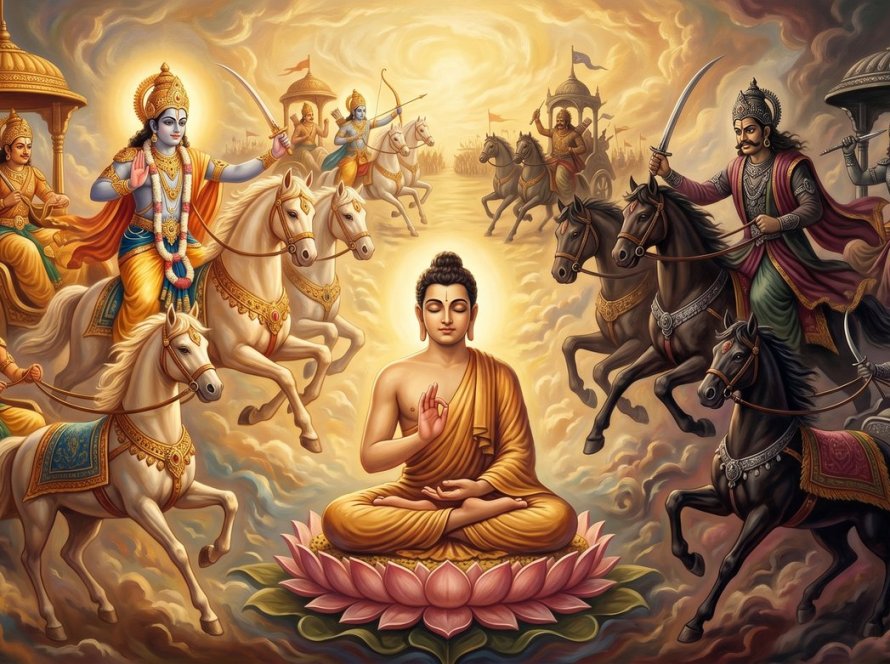
Arjuna surrenders: “I am confused about my duty. I am your disciple; teach me.” With this, the relationship of guru and disciple is established, and Krishna begins to speak. He gently rebuke’s Arjuna’s despondency as unworthy of the Self.
The immortal soul
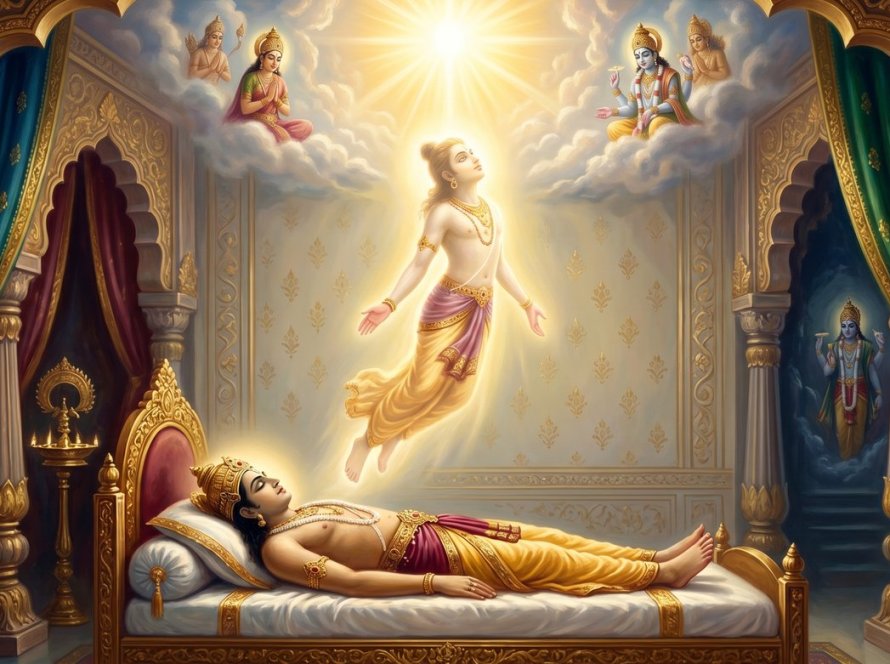
Krishna’s first great teaching is the deathlessness of the soul (atman): “It is never born, nor does it ever die; it is unborn, eternal, ever-existing… it is not slain when the body is slain” (2:20). As one casts off worn-out garments and puts on new ones, so the soul casts off worn-out bodies. The wise grieve neither for the living nor the dead.
The birth of Karma Yoga
Krishna then introduces the path of selfless action: “You have a right to your actions alone, never to their fruits” (2:47). Act without attachment to results, even-minded in success and failure — for “yoga is skill in action” and “evenness of mind” (2:48,50). This single principle becomes the foundation of Karma Yoga.
The steady wisdom (Sthitaprajna)
The chapter closes with one of its most loved passages: the description of the sthitaprajna, the person of steady wisdom — one who has withdrawn the senses from their objects “as a tortoise draws in its limbs,” who is undisturbed amid pleasure and pain, and who rests in the peace of the Self.
For the Kriya yogi
This chapter gives both the why and the first how: know yourself as the deathless soul, and act in the world without bondage. The interiorising of the senses it describes is exactly what Kriya Yoga accomplishes through the science of the breath. Return to the Bhagavad Gita overview.
This is part of our complete Bhagavad Gita summary of all 18 chapters.

1 Comment