The Yoga Sutras— Book 3: Vibhuti Pada (On Powers)
The third book, the Vibhuti Pada or chapter “on powers,” turns inward to the final three limbs of yoga and to the extraordinary capacities that unfold from deep meditation — together with a sober warning about them.
The three inner limbs
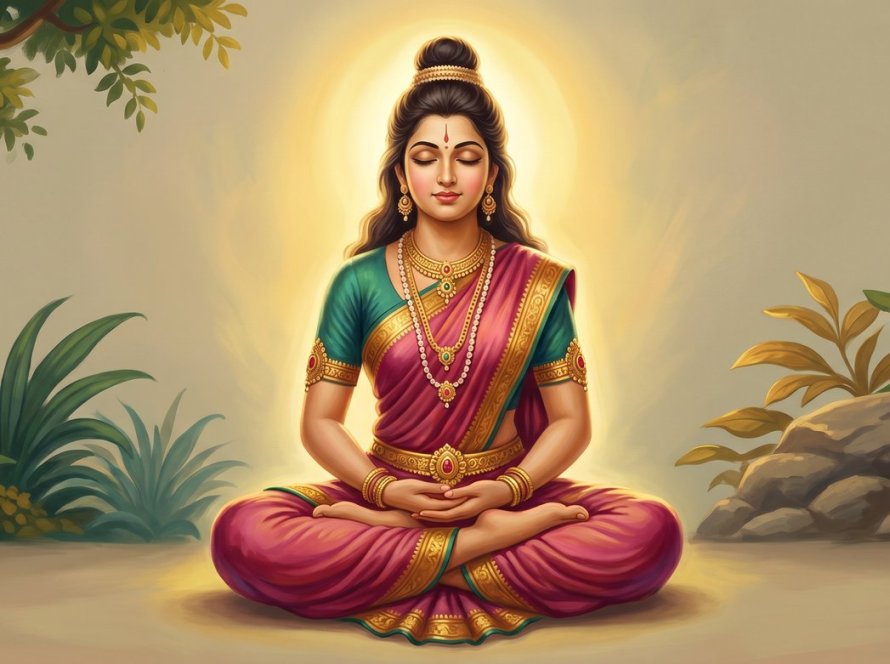
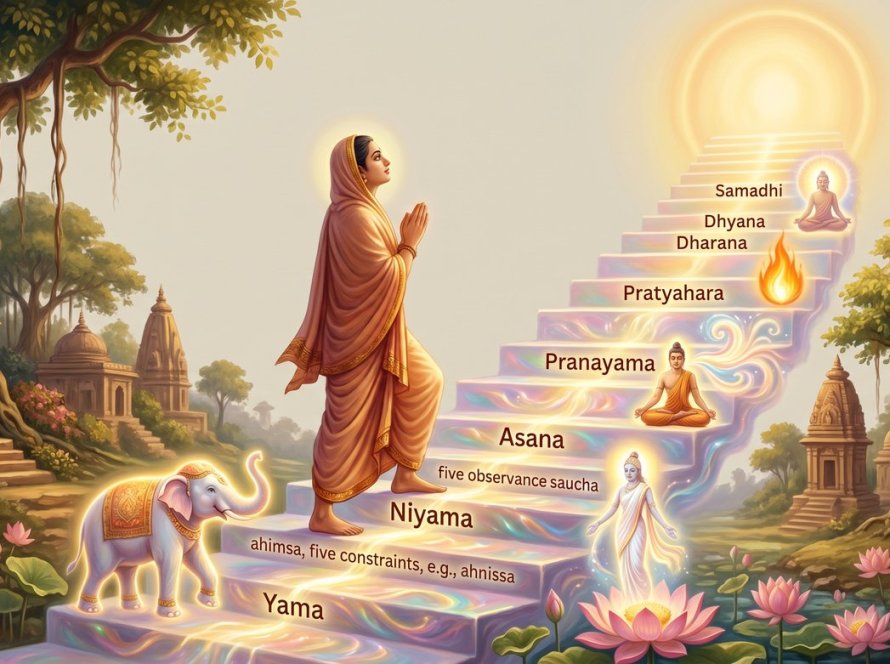
Where the previous book gave the outer limbs, here Patanjali defines the inner three. Dharana is concentration — binding the mind to a single point (3.1). Dhyana is meditation — the unbroken flow of attention toward that point (3.2). And samadhi is absorption — when the meditator, the act of meditation, and the object become one, and only the object shines, as if the mind itself had disappeared (3.3). These deepen naturally one into the next, like a thread drawn ever finer.
Samyama: the master key
When dharana, dhyana, and samadhi are practised together upon a single object, Patanjali calls it samyama (3.4) — “perfect discipline,” the master key of the whole science. From the mastery of samyama, he says, dawns the light of higher wisdom, prajna (3.5). This focused, unified awareness, turned toward any object, reveals that object’s deepest nature. It is the instrument by which the yogi knows from within what the senses can never reach. The same gathering of awareness at the spiritual eye lies at the heart of Kriya practice.
The vibhutis: the powers that arise
Most of the chapter then catalogues the vibhutis or siddhis — the powers that arise when samyama is directed upon particular objects. By samyama, Patanjali says, the yogi may gain knowledge of past and future, understanding of the speech of all creatures, knowledge of former lives, insight into the minds of others, and — turned upon the body and its energies — remarkable strength, lightness, and perception of the subtle, the hidden, and the distant. Directed upon the cosmos, it yields knowledge of the worlds, the stars, and their movements; upon the body, knowledge of its inner order.
The great warning
And then, in one of the most important verses in all of yoga, Patanjali stops the seeker short (3.37): these powers, he says, are accomplishments in the outward-turned state — but they are obstacles to samadhi. They are by-products, not the goal; golden chains that can bind the unwary to spiritual pride and halt the journey at its threshold. The wise yogi notes them and passes on. We explore this theme further in What Is a Siddha?
Toward the highest discernment
The chapter ends by pointing beyond all powers. Through the finest samyama the yogi attains viveka, the discrimination between the luminous intelligence of nature (sattva) and the pure consciousness of the Self (purusha) — and from this, a knowledge that embraces all (3.49). Yet even here Patanjali warns against the temptations and invitations that may come (3.51); only by non-attachment to this exalted state is the very seed of bondage destroyed, opening the way to liberation — the subject of the final book.