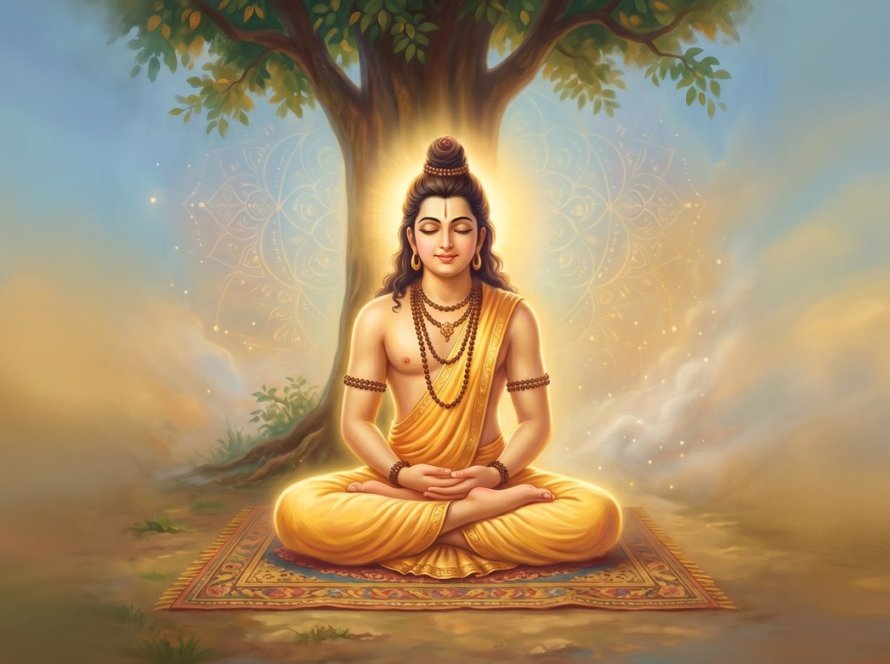
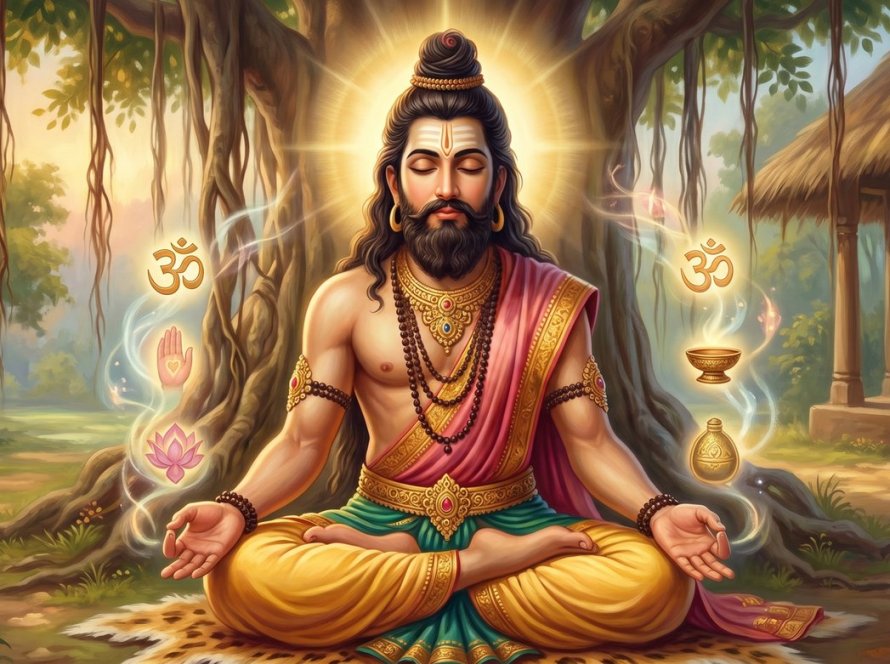
The Yoga Sutras— Book 2: Sadhana Pada (On Practice)
If the first book defines the goal, the second — the Sadhana Pada, the chapter “on practice” — hands us the tools. In 55 sutras Patanjali lays out the practical path, including the famous eight limbs of yoga.
Kriya Yoga: the path of action
The chapter opens with a definition that gives our whole tradition its name (2.1): “Tapah svadhyaya Ishvara-pranidhanani kriya-yogah” — austerity, self-study, and surrender to the Lord constitute Kriya Yoga. Its purpose (2.2) is to weaken the causes of suffering and lead the mind toward absorption. We explore these three pillars in depth in The Threefold Path in Daily Life.
The five causes of suffering
Why do we suffer? Patanjali names five kleshas, afflictions that cloud the mind (2.3): avidya (ignorance of our true nature), asmita (egoism), raga (attachment), dvesha (aversion), and abhinivesha (clinging to life, the fear of death). Of these, ignorance is the root from which the others grow (2.4). Mistaking the impermanent for the eternal, the not-self for the Self — this is the avidya that the whole path exists to dissolve.
The eight limbs of yoga
At the heart of the Sadhana Pada is Patanjali’s most famous teaching: ashtanga yoga, the eight limbs (2.29). They are a complete ladder from outer conduct to inner absorption:
- Yama — ethical restraints toward the world
- Niyama — observances toward oneself
- Asana — steady posture
- Pranayama — regulation of the breath and life-force
- Pratyahara — withdrawal of the senses inward
- Dharana — concentration
- Dhyana — meditation
- Samadhi — absorption
The Sadhana Pada explains the first five — the outer limbs; the inner three are taken up in the third book.
Yama and niyama: the ethical foundation
The five yamas (2.30) are non-violence (ahimsa), truthfulness (satya), non-stealing (asteya), moderation of the senses (brahmacharya), and non-possessiveness (aparigraha). The five niyamas (2.32) are purity (saucha), contentment (santosha), austerity (tapas), self-study (svadhyaya), and surrender to the Lord (Ishvara-pranidhana). These are not arbitrary rules but the natural conduct of a mind seeking stillness — for an agitated conscience can never be calm.
Posture, breath, and turning inward
Then come the practices the body knows. Of posture Patanjali says only, with perfect economy (2.46): “Sthira-sukham asanam” — the seat should be steady and comfortable. Upon a settled posture rests pranayama, the regulation of the breath (2.49–51), which steadies the life-force flowing through the nadis. And as the breath grows quiet, the senses naturally release their grip on the world — this is pratyahara (2.54), the doorway between the outer limbs and the inner journey of the next book.
Explore each of the eight limbs in depth in our dedicated series: The Eight Limbs of Yoga.